
Slipped Roof Tile Repair Cost UK: What Are You Really Paying For?
Quick answer: replacing or re-fixing a few accessible slipped tiles is usually one of the smaller roofing repairs, but the tile itself is rarely the expensive part. Access, matching old tiles, roof pitch and any failed battens or underlay beneath the covering are what turn a simple tile job into a larger repair.
Reviewed: August 2026. Cost figures are broad UK guide ranges only; access, roof type, extent of damage and scaffolding can change the final quote substantially.
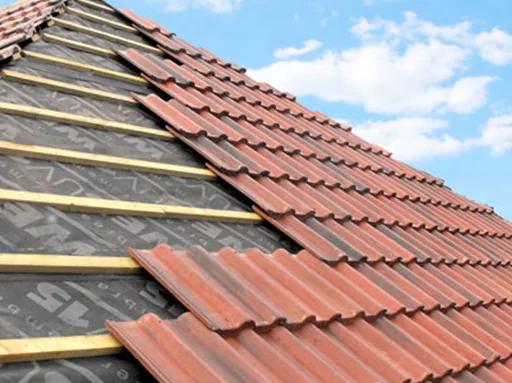
Typical slipped roof tile repair cost in 2026
Published UK guides commonly put a small accessible tile repair in the low hundreds, with costs rising when several tiles are involved, the roof is difficult to reach or the timber battens and underlay underneath need work. Scaffold can cost more than the replacement tiles themselves.
Why roof tiles slip
Failed nails or clips
Older fixings corrode or loosen, particularly on exposed slopes.
Rotten or split battens
If the timber batten beneath the tile has failed, simply sliding the tile back into place will not create a lasting repair.
Storm movement
Strong wind can lift a tile enough to break the fixing or move the overlap.
Previous poor repairs
Tiles held with blobs of sealant or foam can move again because the underlying fixing problem was never corrected.
Age and brittle tiles
Older concrete, clay and slate coverings can become harder to disturb without causing neighbouring breakages, which increases labour.
When a “one tile” repair is actually a bigger problem
A roofer should look beyond the visible slipped tile if there are several displaced tiles on the same slope, torn underlay, soft battens, repeated storm movement or widespread surface deterioration. Multiple isolated repairs across an ageing roof can become poor value compared with a planned section repair or roof replacement.
What should be included in the repair?
- Safe access to the affected area
- Removal of loose or broken material
- Check of the batten and underlay directly beneath the defect
- Correct re-fixing or replacement with a matching tile where practical
- Check of neighbouring tiles disturbed by the repair
- Clear explanation if the visible defect is part of a larger failure
Can one slipped tile cause a leak?
Yes. The underlay may keep water out temporarily, but it is not intended to be the primary weatherproof layer indefinitely. Wind-driven rain can also travel beneath adjacent overlaps, especially in heavy weather. If the tile has moved, deal with it before the next storm exposes a larger area.
Frequently asked questions
How much does it cost to replace one slipped roof tile?
For an accessible roof, the overall charge is usually driven by call-out, labour and safe access rather than the price of one tile. Difficult access or scaffold can make a very small repair disproportionately expensive.
Can a slipped tile simply be pushed back into place?
Only if the fixing and batten are still sound. If the nail, clip or batten has failed, the tile needs to be correctly re-fixed rather than just repositioned.
Will one slipped tile make the roof leak immediately?
Not always. The underlay may provide temporary protection, but wind-driven rain can still enter and the exposed underlay can deteriorate if the defect is left.
Why do several tiles sometimes slip together?
Several slipped tiles can point to ageing fixings, failed battens, storm damage or a wider installation problem rather than several unrelated single-tile faults.