
Fascias, Soffits & Guttering — Surrey & London
Fascias, soffits and guttering replacement across London & Surrey. We focus on proper roofline upgrades and replacements — typically where the existing timber or uPVC has failed, the drainage is compromised, or the roofline work is part of a wider roofing project.
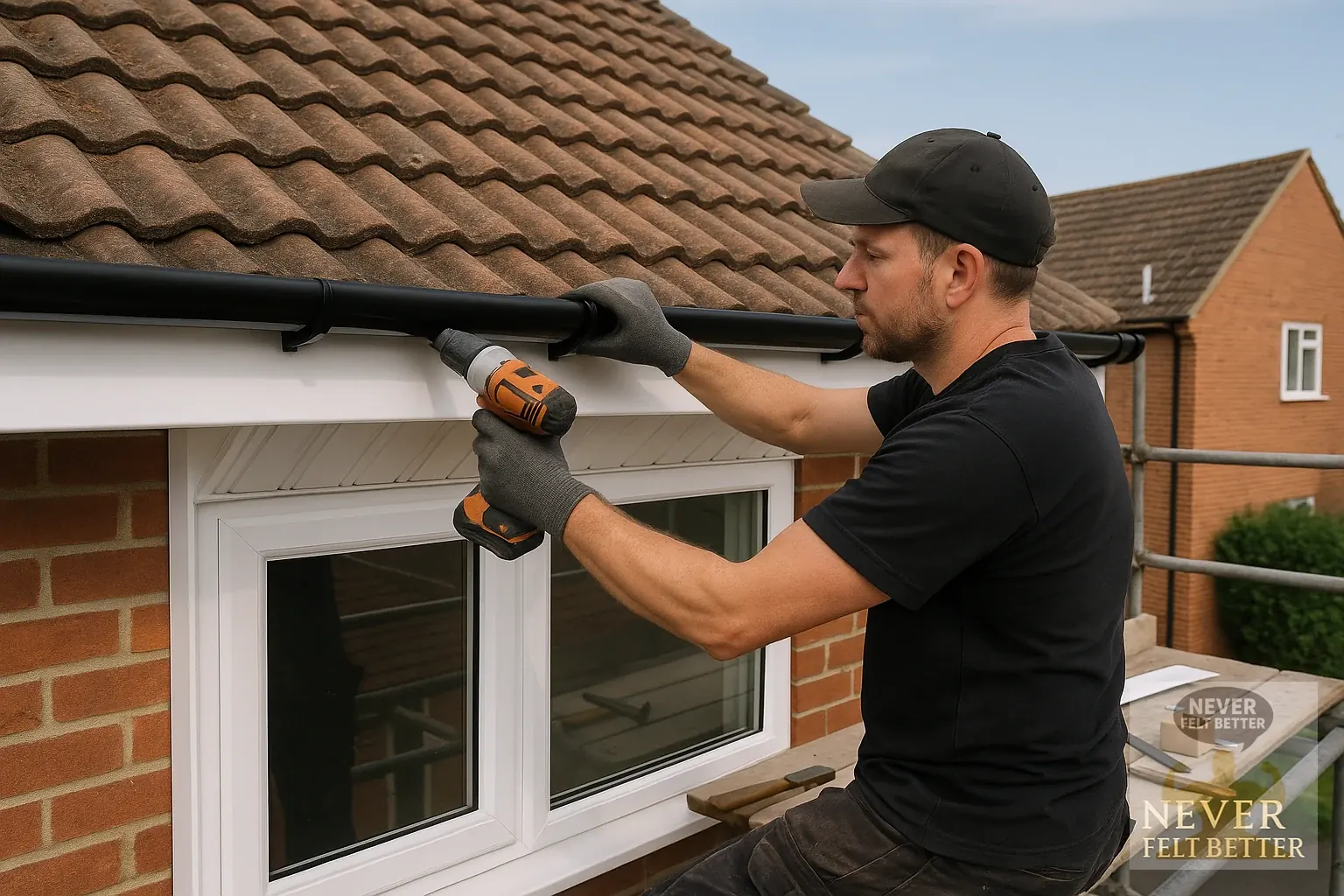
Full roofline replacement
uPVC fascias, soffits and guttering replacement across London & Surrey. Upgrade your roofline properly — better drainage, better finish, no more rotting timber.
What happens when fascias and guttering fail
Rotted fascia boards allow water to sit against the roof structure and wall plate. Guttering that has pulled away or pitched incorrectly sends water down brickwork rather than into the downpipe. Over time, persistent overflow causes damp staining on external walls, erosion of pointing and — in worse cases — water tracking into the wall cavity. Most homeowners only address roofline replacement once it is clearly overdue.
What we replace — and how we specify it
We replace full rooflines in uPVC: fascias, soffits, bargeboards and guttering systems including downpipe runs. Where existing timber has deteriorated behind old fascias, we assess the condition of the wall plate and rafters before fitting new boards. The specification is set out in writing before we start, so you know exactly what is being removed, what is going in and how the drainage will be managed.
When is the right time to replace fascias, soffits and guttering?
The best time is usually when a roof is already scaffolded for replacement or major repairs — combining the work saves cost and avoids a second scaffold later. It also makes sense when timber behind the fascia has rotted, when guttering is pulling away from the house, or when persistent overflow is causing damp staining on brickwork below.
Signs your roofline needs more than maintenance
- Paint that is cracking and peeling at the eaves — often the first visible sign that timber fascias are holding moisture
- Guttering that has pulled away from the fascia — a sign that the fixing board has softened enough that it can no longer hold bracket screws
- Overflowing gutters in moderate rain — the fall is no longer draining correctly to the outlet, or joints have opened and are leaking mid-run
- Damp staining on external render or brickwork below the eaves — caused by water overflowing or dripping outside the gutter channel
- Birds or insects getting into soffits — cracked or missing soffit panels create entry points into the roof void that need addressing properly
FAQs
When is the right time to replace fascias and soffits?
The most cost-effective time is when a property is already being scaffolded for a roof replacement or chimney repair — the scaffold access is already in place, and there is no second mobilisation cost. Outside of a wider roofing project, replacement makes sense when timber fascias have rotted behind old cladding, when soffits have cracked or pulled away, or when guttering is failing in multiple places rather than at one isolated joint.
How do I know if my fascias are timber or uPVC — and does it matter?
On properties from the 1990s onward, uPVC is typical. On older properties, the original boards are often softwood timber that has been painted over many times. The signs of timber failure include paint that is cracking and peeling, boards that feel soft when pressed, and guttering that has pulled away from the fixings. When we remove old fascia boards, we always check the condition of the wall plate and rafter feet behind — if there has been sustained moisture, the timber structure may need attention before new boards go on.
Do you replace just one side of the house or the full roofline?
Either is possible. Where only one elevation has deteriorated, we can quote for that section. Where a full roofline replacement is warranted — and where the scaffold will be going up for a re-roof anyway — doing the whole property in one visit makes more practical and financial sense.
What brings most homeowners to this service
Most Surrey and London homeowners contact us about roofline work after noticing staining on render below the eaves, overflowing gutters in moderate rain, peeling paint where the fascia meets the roof edge, or birds getting into damaged soffit panels. The right approach is to look at drainage, ventilation and the surrounding roof edge together — so the replacement solves the practical problem rather than just improving appearances.
Fascias, soffits and guttering — when replacement makes sense
Roofline work is often treated as cosmetic, but damaged fascias, sagging soffits and poorly functioning guttering point to practical problems: leaking joints, poor falls, overflowing water washing down brickwork, or timber that has rotted because drainage has failed for too long. Left unaddressed, failed roofline components cause damp staining on external walls and, in time, moisture tracking into the wall structure.
Simple gutter repairs — replacing a leaking union or rehanging a sagging length — are worth doing when the overall system is otherwise sound. Full replacement makes more sense when the guttering is over 20 years old and failing in multiple places, when timber fascias have rotted behind old uPVC cladding, or when a scaffold is already in place for a roof or chimney job, making the work cost-effective to include.
- uPVC fascias and soffits replacement
- New guttering runs and downpipes
- Correct falls, outlets and bracket spacing
- Replacement of leaking unions and tired sections
- Roofline upgrades carried out alongside larger roofing jobs