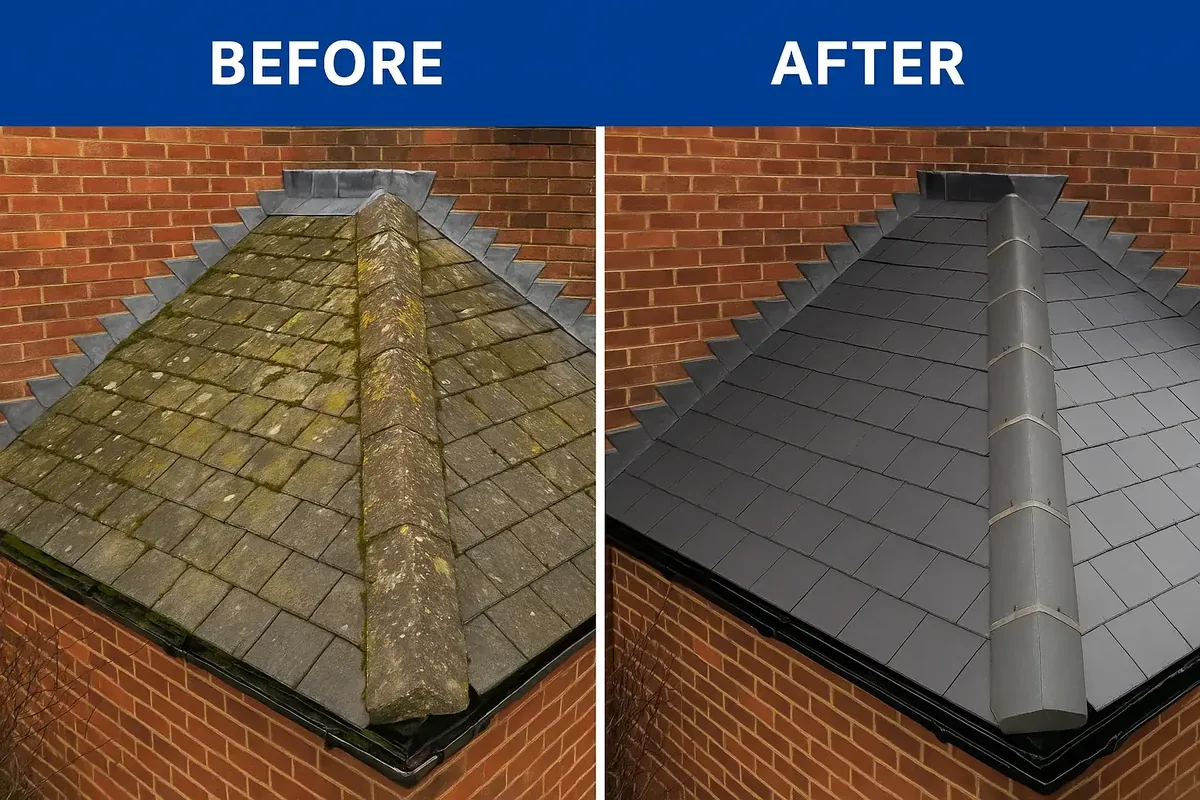
Roof replacement Kensington
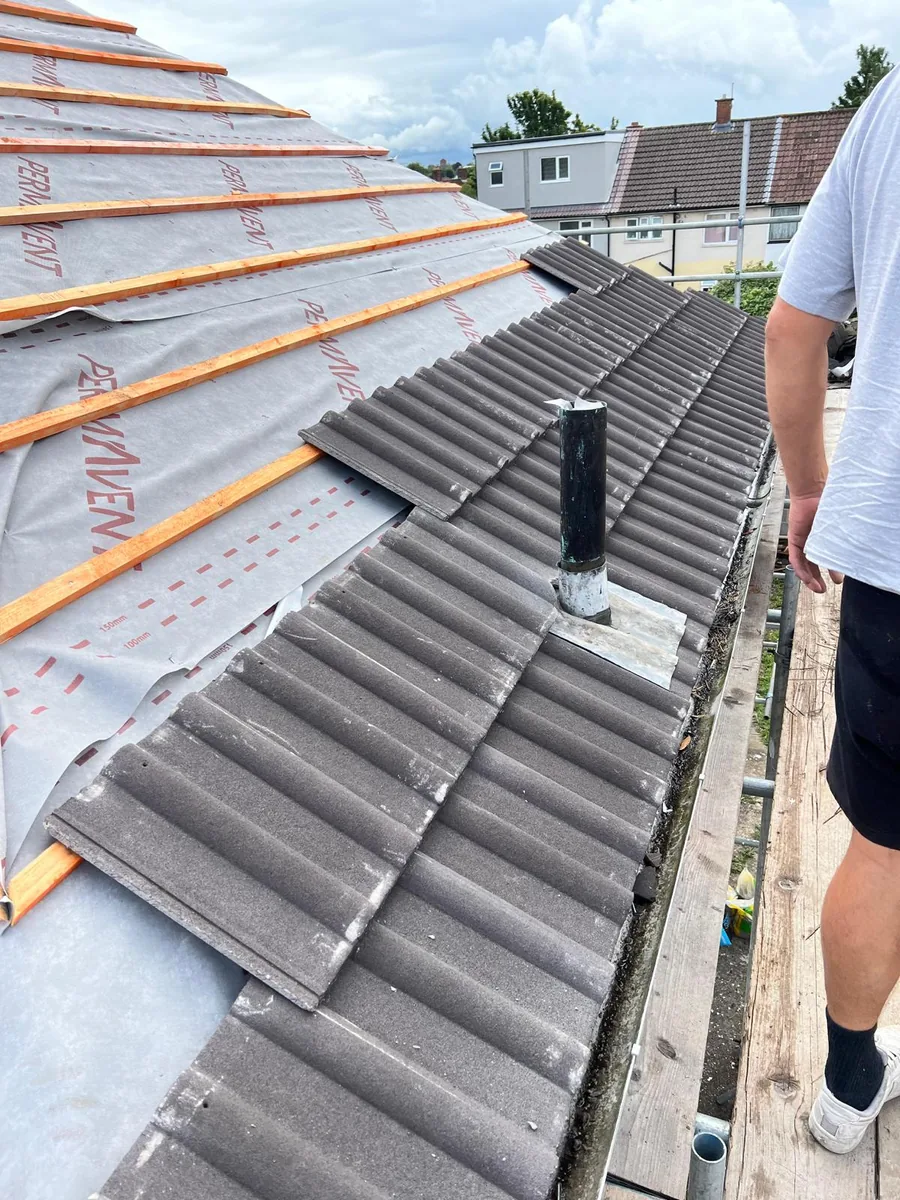
Complete or partial re-roofing for Victorian terraces, mews houses, mansion blocks and larger homes, including battens, membrane, slate or tile coverings, ridges and essential lead details.

Never Felt Better provides planned and urgent roofing work for homes and residential properties across Kensington, including South Kensington, Kensington High Street, Earl's Court borders, Gloucester Road, Queen's Gate and the streets around Holland Park. We investigate the complete roof detail—not only the visible stain—then provide a written scope for roof repairs, roof replacement, flat roofing, chimney work and leadwork.
Speak directly with a roofer about a leaking roof, failing flat roof, worn slate covering, chimney defect or complete roof replacement.
Call 07424 151 946 or send details and photographs. We will confirm whether the job falls within our scope and arrange the next practical step.
Useful to send: the property address, where water is appearing, when it happens, any previous repair history and safe photographs from ground level or inside the loft.
Each service below links to the relevant detailed guide and includes a direct click-to-call option. The photographs illustrate the roof details and types of work described; see Projects & Results for clearly identified completed-project examples.
Complete or partial re-roofing for Victorian terraces, mews houses, mansion blocks and larger homes, including battens, membrane, slate or tile coverings, ridges and essential lead details.
Leak tracing and permanent remedial work for slipped slates, failed flashings, cracked mortar, storm damage, valleys and recurring defects on complex period roofs.
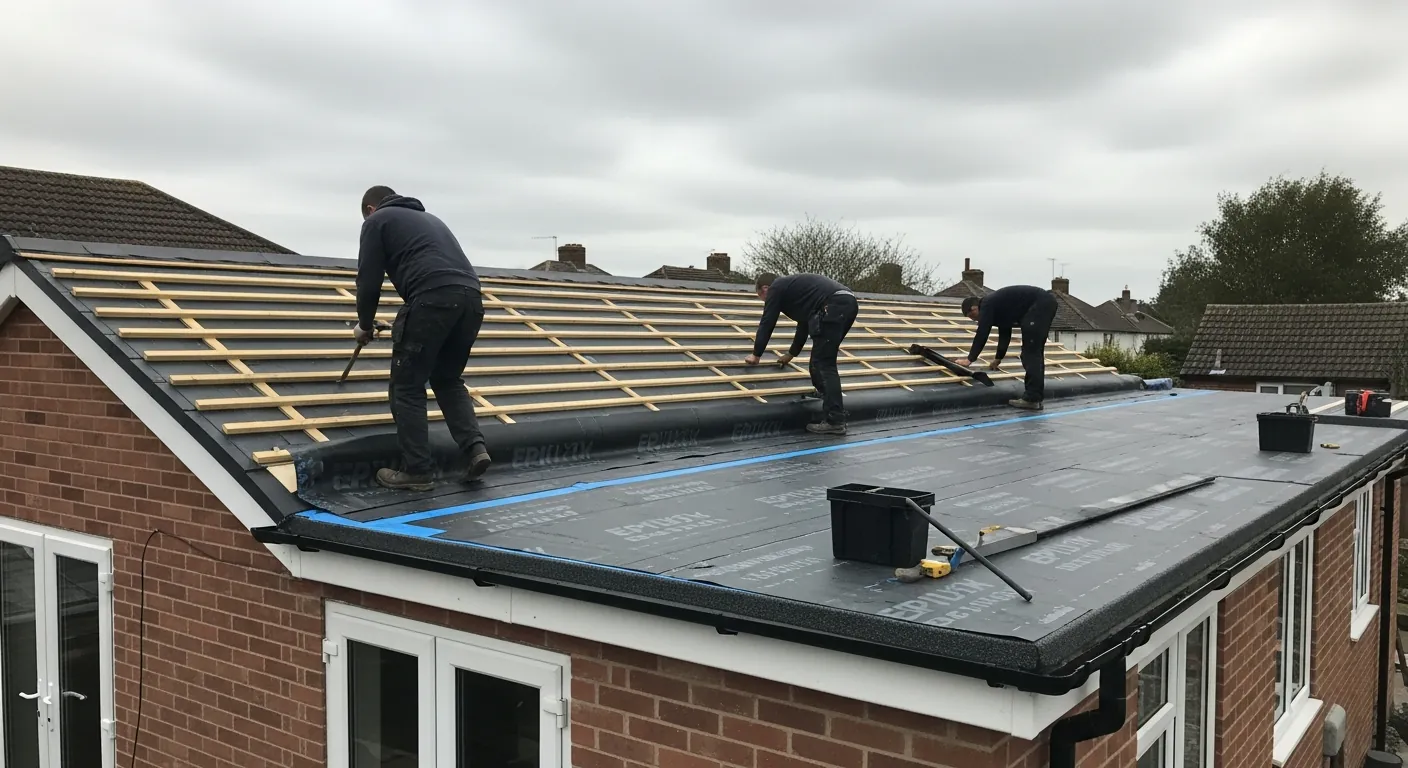
EPDM and GRP systems for rear additions, roof terraces, dormers, garages and modern extensions, with careful attention to outlets, upstands, parapets and skylights.
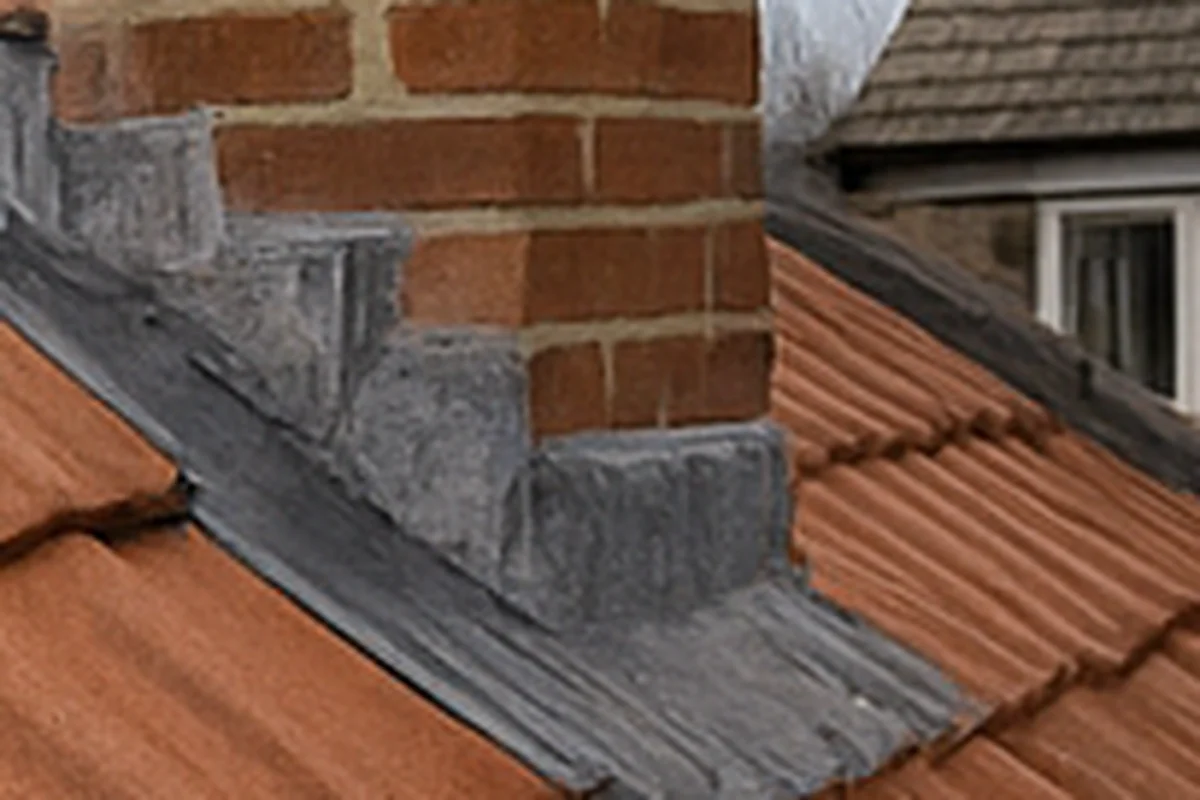
Step flashings, soakers, back gutters, valleys and parapet junctions renewed to a durable specification rather than covered with short-term sealants.
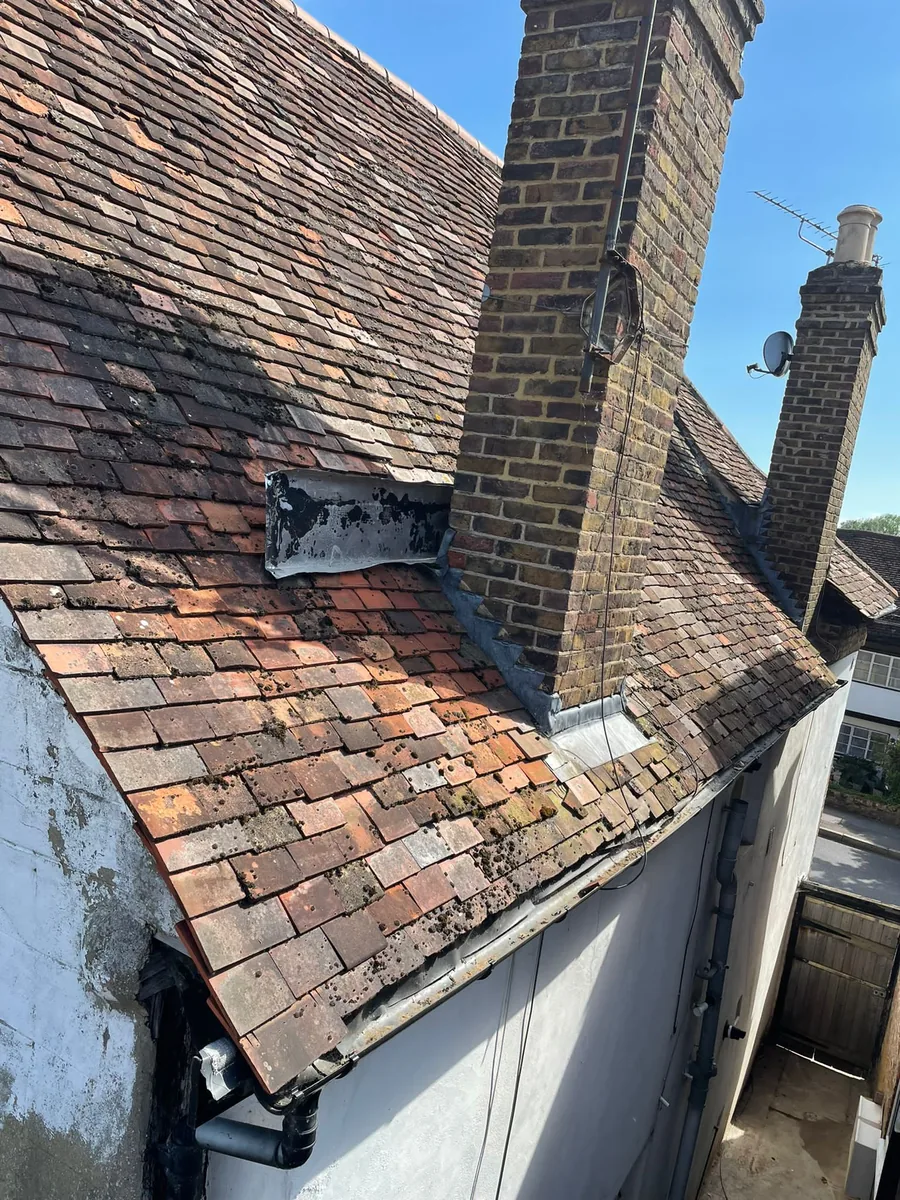
Repointing, flaunching, cowl and pot work, lead flashing renewal and repairs to shared or multi-flue chimney stacks common on Kensington terraces.
Urgent make-safe and weatherproofing work after sudden leaks, wind damage or displaced coverings, followed by a clear permanent-repair recommendation.
These photographs support the service explanations and should not be read as proof of a job in this exact postcode. Clearly identified completed work is shown on the Projects & Results page.
For a recurring leak or a roof with several ageing details, choose a roofer who will inspect the covering, flashings, valleys, chimneys, parapets, drainage and adjoining flat sections as one system. Kensington roofs are often altered over decades, so the nearest cracked tile is not always the true source of water. Never Felt Better carries out larger repairs and replacement work across SW7 and W8, with written scopes and clear recommendations.
A ceiling mark tells you where water has finished its journey, not necessarily where it entered. On a pitched roof, rain can pass beneath a slipped slate, travel along underlay or timber, and emerge several metres away. Around a chimney or parapet, a failed lead detail can allow water into a party wall or roof void before it becomes visible inside. Rear additions can also combine pitched and flat roofs, creating vulnerable junctions that are easy to patch badly.
Our starting point is therefore diagnosis. Depending on safe access and the nature of the property, an inspection may consider missing or fractured slates, tile movement, ridge and hip bedding, valley condition, lead soakers and step flashings, chimney pointing, parapet copings, outlet blockages, gutter falls, flat-roof laps and the condition of earlier repairs. We then separate urgent weatherproofing from the permanent work so the quote is clear.
Common repair requests include isolated slate replacement, localised renewal around a chimney, repairs to a leaking valley, failed flashing at a wall abutment, defective rainwater outlets and damage caused by wind or displaced materials. Where repeated patching has left incompatible layers of felt, sealant or liquid coating, removal and proper renewal can be better value than adding another temporary layer. Read more about our roof repair and leak investigation service.
Victorian and Edwardian terraces, mews houses and converted buildings can retain original roof forms while having undergone several generations of repair. The visible slates may be only one part of the problem: old battens, tired underlay, corroded fixings, inadequate ventilation and worn leadwork can all contribute to recurring failure. A roof replacement should address the complete weathering system rather than simply exchange one covering for another.
A properly defined re-roof may include scaffold and access, careful stripping, timber assessment, breathable membrane, treated battens, compatible slates or tiles, mechanically fixed ridge or suitable traditional detailing, renewed valleys and abutments, chimney repairs, ventilation and rainwater goods. The exact specification depends on the roof, the building's status and the appearance that must be retained. Salvageable natural slate may sometimes be reused selectively, but only after its condition and suitability have been assessed.
We do not publish a single “Kensington roof replacement cost” because access, roof geometry, material choice, scaffolding, party-wall positions, chimney numbers and conservation constraints can change the scope substantially. A narrow mews property with difficult loading may be more complex to organise than a larger property with straightforward access. The useful figure is a written price tied to a defined specification. See what should be included on our roof replacement page.
Lead is common around Kensington roofs because it can form durable weathering details at chimneys, walls, valleys, dormers, parapets and outlets. It performs well when the sheet size, code, laps, fixings and allowance for thermal movement are correct. It performs badly when a split is covered with sealant, when sheets are installed too large, or when water is directed into a detail that cannot drain freely.
Parapet and box-gutter leaks deserve particular care. Leaves and debris can restrict outlets, while shallow falls or ageing linings allow water to sit. During heavy rainfall, an apparently minor defect can then affect ceilings, decorative plaster or neighbouring parts of the building. The repair must consider the route of the water, the capacity and condition of outlets, and the interfaces with masonry and roof coverings.
For chimney abutments, permanent work may involve individual soakers beneath the slates, stepped cover flashings chased into the masonry and a back gutter where the stack interrupts the roof slope. The correct solution depends on the construction; surface-applied mastic is not a substitute for a properly formed detail. Our chimney repair and leadwork service covers these interconnected elements.
Kensington properties frequently have flat or low-pitched areas over rear additions, garages, terraces, dormers and smaller extensions. These sections can fail around rooflights, outlets, perimeter upstands and the junction with the main building. Ponding water does not automatically prove a roof is leaking, but it can expose weak laps and shorten the service life of a poorly designed system.
We install and replace appropriate felt, GRP fibreglass and EPDM systems. Selection should be based on roof shape, use, substrate, detailing and access rather than a claim that one product is universally best. Warm-roof insulation, falls, drainage, fire performance and edge details must also be considered as part of the specification. Where a roof is used as a balcony or terrace, the build-up and finished surface require additional design considerations and should not be treated as a standard shed-style flat roof.
During renewal, wet or damaged decking should be identified rather than covered. Upstands need sufficient height where practicable, outlets must remain maintainable, and rooflight kerbs should be integrated into the chosen system. Visit our flat roof replacement page for the systems and process we offer.
Chimneys are exposed on every side and often outlast several roof coverings. Open joints, cracked flaunching, damaged pots, poor flashings and saturated masonry can all contribute to damp. Repointing is only effective when loose material is removed to a suitable depth and the replacement mortar is compatible with the brickwork; brushing mortar across the face of shallow joints is cosmetic rather than a lasting repair.
A chimney inspection should also consider whether water is entering through the roof junction, the stack itself or an uncapped and disused flue. These causes may produce similar internal symptoms but require different work. We assess the accessible detail and explain whether the scope is local repointing, lead renewal, flaunching, pot or cowl work, or a broader rebuild. Where a stack is shared, access and responsibility may need to be agreed with the adjoining owner before work begins.
Kensington contains many conservation areas and listed buildings. Like-for-like repair that does not affect special character may be treated differently from an alteration, but property status and the proposed work must be checked before materials or roof form are changed. The Royal Borough of Kensington and Chelsea states that listed-building consent is required for alterations affecting a listed building's fabric or character, and that Article 4 directions can remove permitted-development rights for works such as changes to roof coverings in specified areas.
Planning permission is also especially relevant to buildings containing flats: RBKC advises that materially altering the external appearance of such a building requires permission. Even where ordinary re-roofing would usually not require planning permission, changing the visible material, roof shape, dormers, rooflights or other external details can alter the position. Owners should check the council's current property records and seek professional planning advice where uncertainty remains.
Our role is to build to the agreed roofing specification; the property owner remains responsible for securing any necessary planning permission, listed-building consent, landlord or freeholder approval and party-wall advice. We can provide a clear description of proposed roofing work for the owner's adviser or managing agent. Useful official guidance is available from RBKC's permission checker and its listed-building search.
Access can be a major part of a Kensington roofing project. Mews streets, controlled parking, shared entrances, rear roofs and limited storage can affect scaffold design, material deliveries and waste removal. A quote should state whether access is included and identify assumptions that could change the price. Where permits, parking suspensions, licences or neighbour access are necessary, responsibilities should be agreed before the start date.
For occupied homes and managed buildings, communication is as important as the roof detail. We aim to define working areas, protect vulnerable surfaces, keep the property weatherproof during the job and explain discoveries that could not reasonably be seen before stripping. Photographs can document concealed defects and completed stages, particularly when the owner, landlord or managing agent is not present each day.
The largest cost variables are not the postcode alone. They include scaffold complexity, roof size and pitch, the number of chimneys and valleys, material availability, listed or conservation requirements, rear access, parking and loading constraints, waste handling, insulation upgrades and the amount of hidden timber repair revealed after stripping. Leadwork is also priced by the detail and quantity, not simply by roof area.
When comparing quotes, check whether each contractor has included the same scope. One price may omit scaffold licences, renewal of valleys, chimney work, insulation, disposal or replacement of defective decking. A cheaper total is not comparable when essential elements are listed as extras or left undefined. We favour a specific written scope so the owner can understand what is—and is not—included.
During an active leak, move possessions away from the affected area where safe, use containers to limit internal damage and avoid entering a loft if water is near electrical fittings. Do not climb onto a wet roof or attempt a repair from a ladder. Call an electrician or the emergency services where there is an immediate electrical, structural or life-safety risk.
Emergency attendance may focus first on making the property reasonably weatherproof; a permanent repair can require dry conditions, safe access, matching materials or scaffolding. Photographs of the internal damage, the weather conditions and any fallen material can help with initial assessment. For urgent enquiries, call 07424 151 946 and leave a message if the team is working at height or unable to answer immediately.
Looking for a roofer near Kensington High Street, Holland Park, South Kensington or a W8/SW7 postcode? We assess roof leaks, slate failures, flat-roof defects, parapet problems, chimney flashing and full roof-replacement requirements across Kensington. Customers commonly contact us about a leaking flat roof on a rear extension, roof repairs for a Victorian townhouse, lead valley replacement, chimney stack repair, a roof inspection before purchase, or the cost of replacing an ageing period-property roof.
For a useful first conversation, tell us the postcode, property type, where water is appearing and whether the roof has been repaired before. Photographs can be attached through the quotation form below.
Yes. We cover SW7 and W8 for suitable larger repairs, leak investigation, leadwork, chimney work, flat roof replacement and re-roofing.
Yes, subject to inspection and safe access. We look for the route and underlying cause of the water rather than automatically coating the previous repair. In some cases the durable solution is to remove incompatible patch materials and rebuild the detail.
Like-for-like re-roofing that does not materially change a house's external appearance will often not require planning permission, but listed buildings, flats, conservation constraints and Article 4 directions can change the position. Check the property with RBKC and obtain professional advice before work where there is any uncertainty.
We can consider roofing work on listed properties where the owner has established the required specification and consents. Materials and details must respect the building, and listed-building consent may be required even where ordinary planning permission is not.
The quote should identify the covering, membrane, battens, leadwork, ridge and hip treatment, ventilation, access, waste removal and any stated allowances or exclusions. The exact scope is property-specific and will be set out in writing.
There is no single best system for every roof. Felt, GRP and EPDM can all perform well when suited to the roof and installed with correct decking, falls, outlets, upstands and edge details. We recommend a system after considering the construction and intended use.
Potentially, yes. The required work, access and ownership responsibilities must be clear. The property owner may need agreement with the adjoining owner and should seek party-wall or legal advice where relevant.
Availability depends on current work, weather, traffic and whether safe access is possible. Call with the address and symptoms. Immediate attendance cannot always mean an immediate permanent repair, especially where scaffold or dry conditions are required.
Contact us with enough information to assess the enquiry. We will explain the appropriate next step and whether a site visit is required. Our
Call 07424 151 946, email quote@neverfeltbetter.co.uk or use the website contact form.
Tell us what is happening, where the property is and whether previous repairs have been attempted. We will confirm whether the work is a suitable fit and arrange an inspection where needed.
Complete the form for a roof repair, roof replacement, flat-roof, chimney, leadwork or emergency enquiry. You can attach up to five photographs so we can understand the property and visible damage before calling you.
Flat roof leaks around Kensington bay windows, rear extensions, dormers and terraces may originate at an outlet, edge trim, chimney abutment or parapet flashing rather than the middle of the roof covering. We inspect those junctions alongside the waterproofing before discussing a localised repair or full replacement.
The best specification depends on the existing deck, drainage falls, thermal build-up, upstand heights and safe access. Read our EPDM and GRP flat roof replacement guide or ask about lead flashing and chimney repairs. For W8 or SW7 properties, include the postcode, photographs taken safely from ground level and any known leak history when requesting a quote.