
Chimney Repairs, Leadwork & Valleys
Chimney stacks and leadwork are responsible for more persistent residential leaks than almost any other part of a roof. The junction between masonry and roof covering is complex — mortar joints, lead soakers, step flashings, back gutters and weathering slopes all need to work together. When one element fails, water finds a way in. We carry out chimney repairs, repointing, leadwork and valley work across London and Surrey, with a focus on getting the detail right. Minimum job value: £1,000.
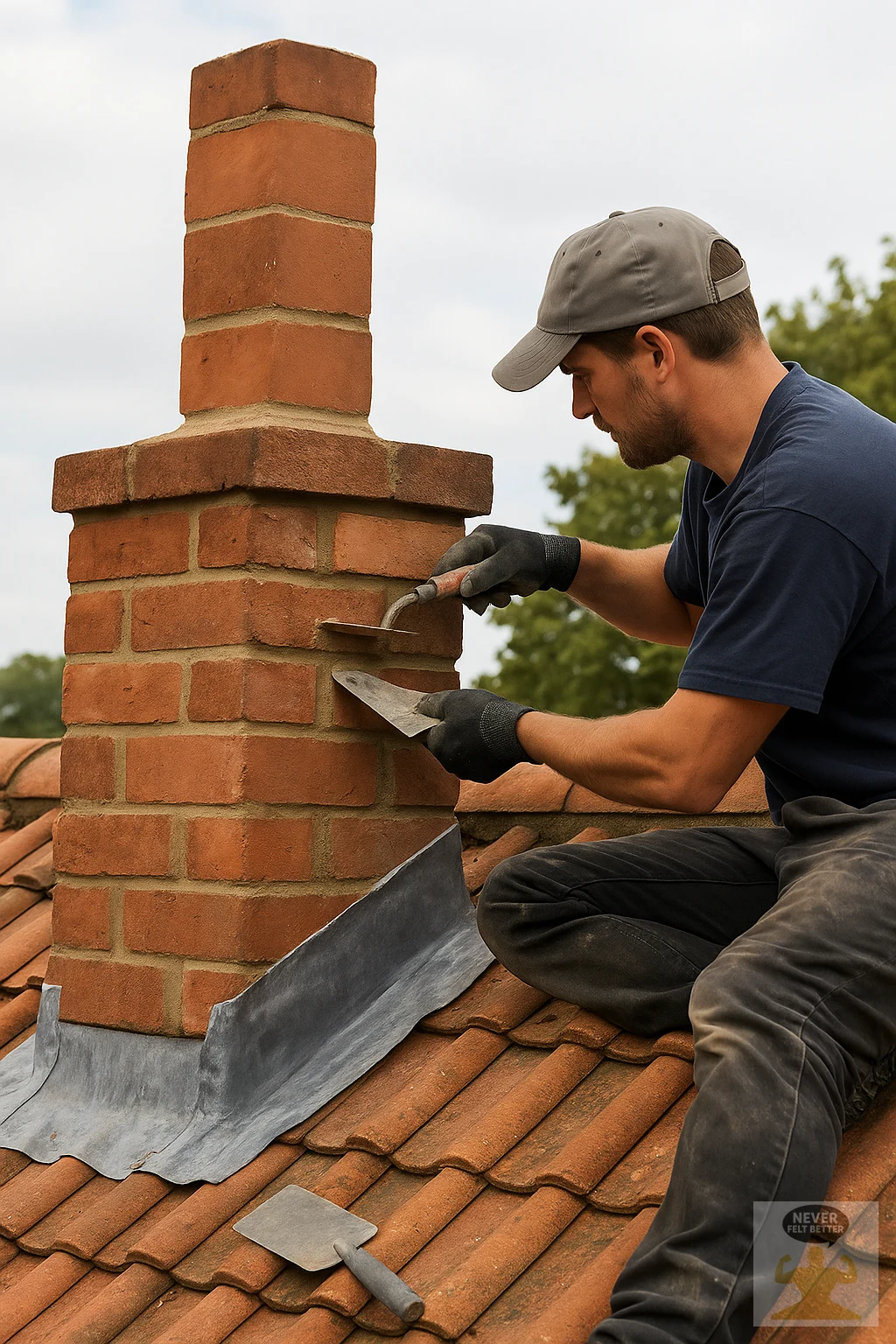
What this service covers
Included work: chimney repointing, flaunching, lead flashing renewal, soakers, step flashings, back gutters, valley linings and abutment details.
- Chimney repointing and flaunching
- Lead flashing, soakers and step flashings
- Back gutters, aprons and valley work
- Fully insured — written quote, photo record on completion
Ask about chimney or leadwork repairs
Call 01344 558 785 or use our contact page.
Chimney and leadwork quotes are detailed in writing — including materials, access method and exactly what we'll be doing before we start.
Why chimney and leadwork problems recur
A chimney stack combines masonry, mortar, a set of lead details and a roof junction — all subject to different rates of movement and weathering. When one element fails, the repair history of the other elements matters enormously. A new flashing bonded to deteriorating pointing will fail sooner than expected. New pointing around an existing corroded lead soaker does not address the actual ingress point. This is why chimney and leadwork problems so often recur after incomplete repairs: the right material was applied at the visible failure, but the adjacent element that was already compromised was left in place.
What we cover
That can include chimney repointing, flaunching, flashing replacement, lead trays, valley work and, where required, more substantial rebuilding. The right answer depends on access, the condition of the stack and how the roof junction has been detailed historically.
When a chimney rebuild makes more sense
If the stack is unstable, heavily weathered or repeatedly patched, rebuild or significant remedial work may be the better option compared with a series of small repairs.
Leadwork — skilled, lasting, worth doing right
Lead detailing around chimney stacks, valleys and abutments is among the most demanding and most visible roofing work. Done well, it lasts decades. Done poorly, it causes the exact persistent water ingress it was meant to prevent. We take leadwork seriously and work to the correct lead codes and fixing methods.
Signs a chimney needs professional assessment
- Staining on an internal wall near a chimney breast — particularly on upper floors or at ceiling level, even when the chimney is no longer in use
- White mineral deposits on external brickwork close to the stack — a sign of water tracking through the masonry and carrying salts to the surface
- Mortar joints that are crumbling or open — often visible as missing or recessed pointing between bricks, especially near the top of the stack
- Lead flashing lifting or gapped at its edge — often caused by thermal movement that has worked the lead away from the masonry chase over time
- Repeated repairs that have not held — a pattern that usually points to the wrong element being repaired, rather than the actual source
- Cracked or missing flaunching at the top of the stack around the chimney pot — this allows water into the core of the stack and can track down inside the breast
Typical related services
- Roof replacement — chimney work is often best done when the roof is already scaffolded
- Roof repairs — valley and junction repairs alongside chimney work
- Emergency roof repair — urgent chimney and flashing failures
FAQs
Is chimney repointing enough, or does the lead flashing need doing at the same time?
In most cases where the pointing is deteriorating, the flashing below it has also been compromised — by movement, by water sitting behind loose mortar, or simply by age. We look at both as part of the assessment. There is little point renewing the flashing if the pointing above it will continue to allow water into the chase, and vice versa. A complete written scope covers both.
When does a chimney need a full rebuild rather than repairs?
When the stack has significant structural movement, when the brickwork has deteriorated beyond the capacity of repointing, or when the bond courses have failed and the stack is visibly unstable. This is less common than it sounds — most chimneys on residential properties are candidates for repair and leadwork renewal rather than full rebuild. We will tell you which applies and why.
Should chimney work be done as part of a roof replacement?
Almost always yes, if chimney attention is warranted at all. The scaffolding for a re-roof gives access to the stack at no additional cost. Including chimney repointing, flaunching and new lead flashings within the re-roof scope is almost always better value than returning as a separate job — and it ensures the whole roof is handed over watertight at the same time.
Leadwork roofing Surrey: why details matter
Leadwork is not just a finishing touch. It is often the reason a roof either stays watertight for years or starts leaking again after the first heavy weather. Good leadwork roofing in Surrey and London homes means the right code of lead, proper clips and fixings, enough allowance for movement, and details that fit the surrounding roof covering rather than fighting against it.
What can fail on a chimney — and how we diagnose it
Chimneys are one of the most common sources of persistent roof leaks on older residential properties because they combine masonry, movement, mortar joints, lead soakers, step flashings and often valleys or roof junctions nearby. A crack in the flaunching, an open mortar joint, slipped lead, a badly chased flashing or a loose pot can all allow water to track down inside the stack and show up as staining on internal ceilings or walls — sometimes well away from where the fault actually sits.
When we investigate a chimney leak, we look at all of it: the condition of the pointing, the quality of any existing leadwork, whether there are soakers under the tiles or just a surface-applied fillet, how the back gutter or valley drains, and whether the stack itself has any structural movement. That survey then drives the written scope — not a generic price.
- Chimney repointing and isolated masonry repairs
- Lead flashing repair and renewal to correct lead code
- Lead soakers, aprons, back gutters and abutment details
- Valley and junction repairs close to the stack
- Investigating recurring internal staining near chimneys