
Roof Leak Around a Chimney: What Usually Causes It?
Quick answer: a leak around a chimney is commonly caused by failed lead flashing or soakers, a defective back gutter, deteriorated pointing or flaunching, cracked masonry, or damaged tiles immediately around the stack. The correct repair depends on which part of the chimney-and-roof junction is actually letting water through.
Reviewed: August 2026. Cost figures are broad UK guide ranges only; access, roof type, extent of damage and scaffolding can change the final quote substantially.
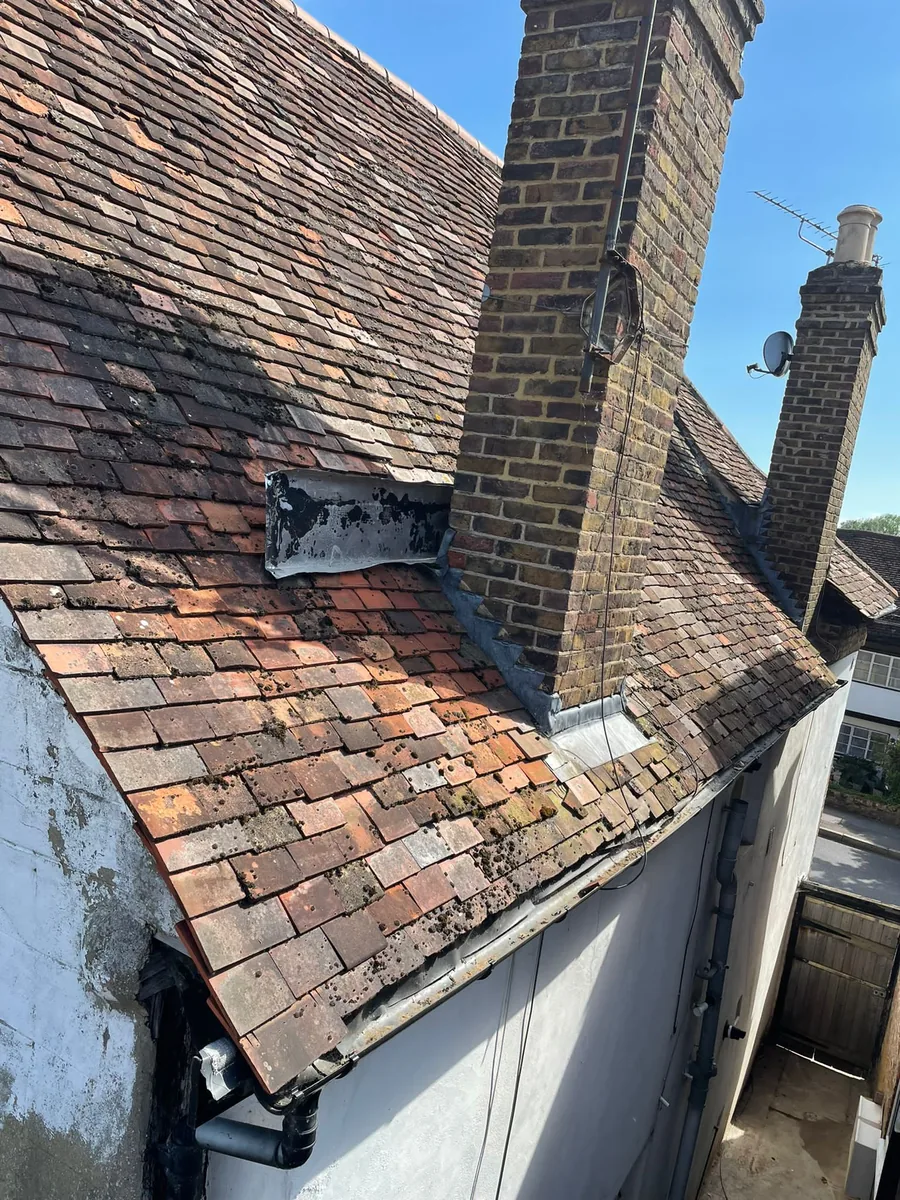
Why chimney leaks are so easy to misdiagnose
A chimney interrupts the roof covering and creates several junctions that must work together. Water can enter on the uphill side of the stack, travel along a rafter or membrane, and appear inside some distance away. That is why simply sealing the point nearest the internal stain is often unsuccessful.
The five details a roofer should check
1. Step flashing and soakers
On tiled and slated roofs, individual soakers sit beneath the covering while stepped lead flashing protects the joint against the chimney. Missing, short, split or badly lapped pieces can allow wind-driven rain behind the covering.
2. Front apron flashing
The apron sheds water onto the roof below the chimney. If it lifts, cracks or has been repeatedly patched, water can track behind it.
3. Back gutter or rear tray
The uphill side of the chimney takes the greatest water load. A poorly formed or blocked back gutter can cause recurring leaks that return after superficial sealing.
4. Chimney pointing and flaunching
Open mortar joints and cracked flaunching allow masonry to absorb water. On older stacks, the masonry and leadwork may both need attention rather than treating one in isolation.
5. Nearby tiles, battens and underlay
A chimney leak is not always the chimney itself. Broken tiles, tired battens or failed underlay next to the stack can create the same internal symptom.
Why repeated sealant patches often fail
Sealant cannot correct a missing soaker, a split back gutter, failed mortar behind counter-flashing or incorrectly formed lead. A lasting repair normally means exposing enough of the junction to see how the water is moving, then repairing the failed component rather than covering it.
Our chimney repair and leadwork service covers repointing, flashing, valleys and related roof-junction work.
How much can a chimney leak repair cost?
Published UK 2026 guides vary widely because access is often the biggest cost. A straightforward local flashing or pointing repair can sit in the low hundreds, while replacing a full chimney flashing system with scaffold can move into four figures. For more detail see our lead flashing repair cost guide.
When the chimney and roof should be repaired together
If the stack needs repointing and the leadwork is already tired, doing both while safe access is in place can be more sensible than paying for two separate visits. The same applies during a full roof replacement: renewing the surrounding chimney details while the covering is stripped avoids rebuilding new roofing around old weak junctions.
Frequently asked questions
What is the most common cause of a roof leak around a chimney?
Failed or incorrectly detailed leadwork is a common cause, but the roofer should also inspect the back gutter, pointing, flaunching and surrounding tiles before deciding on the repair.
Why does my chimney leak only when the wind is strong?
Wind-driven rain reaches sideways-facing gaps and laps that normal vertical rainfall may not reach, especially around step flashing, soakers and the uphill side of the stack.
Can repointing alone stop a chimney leak?
Sometimes, if deteriorated mortar is the only failure. If the lead flashing or soakers are also defective, repointing alone will not solve the leak.
Does a leaking chimney mean I need a new roof?
Not necessarily. Many chimney leaks are localised junction failures. A full roof replacement is considered when the wider covering, battens or membrane are also at the end of their useful life.